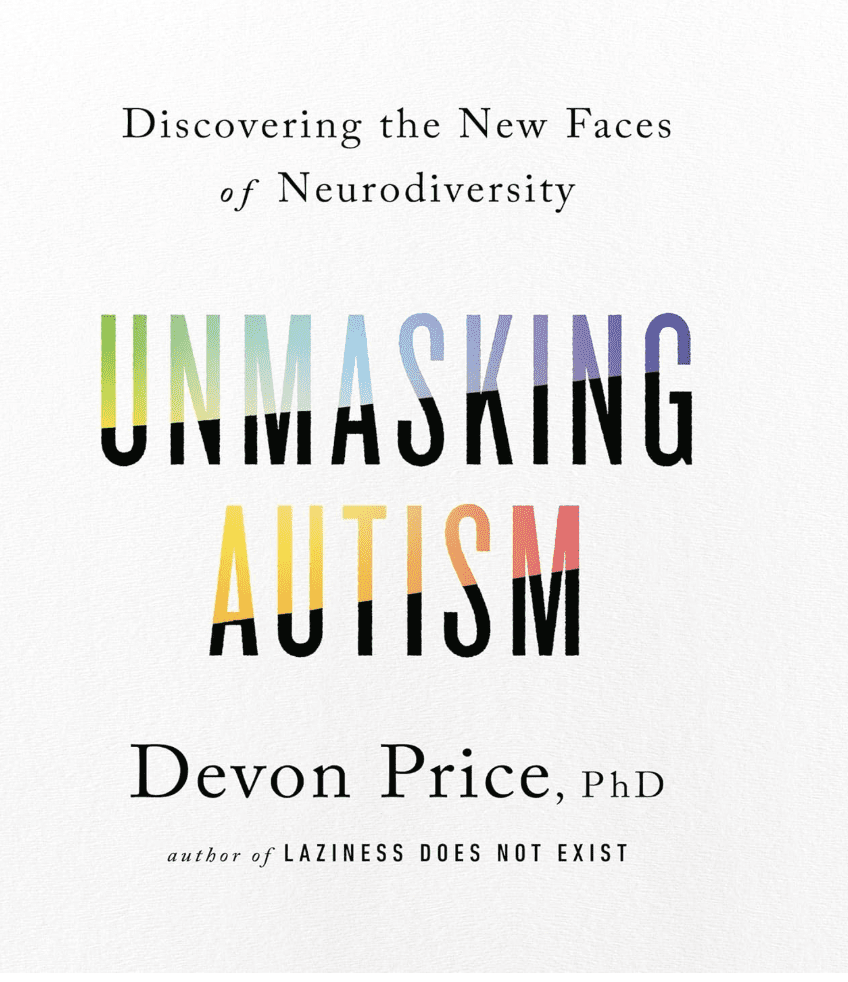
Reading Unmasking Autism felt both familiar and complicated for me. Familiar in the sense that so much of what Devon Price describes echoes what I hear every day from adults I evaluate. The stories of masking, of studying social behavior, of feeling fundamentally different without having a language for it are incredibly consistent with the lived experiences my clients bring into the evaluation process. In that way, the book captures something deeply real. It names a pattern that has long gone unrecognized, especially for high-masking adults who were overlooked in childhood.
At the same time, I experienced the book as part of a broader cultural shift rather than a standalone explanation. Price’s framing of masking is powerful and validating, but in my clinical lens, masking is only one piece of a much more complex developmental picture. The adults I work with are not only describing present-day effort and exhaustion, they are also revealing longstanding patterns in social communication, sensory processing, cognitive style, and developmental history that extend far beyond conscious masking strategies. So while the book offers an important entry point, I find myself holding a wider and more nuanced framework when I think about what actually constitutes autism.
I also had a strong reaction to the emphasis on self-recognition and self-identification. I deeply respect how meaningful it is for people to finally see themselves reflected in autistic narratives, especially after years of feeling misunderstood or misdiagnosed. That moment of recognition can be profoundly regulating and validating. At the same time, I remain grounded in the importance of comprehensive evaluation. Not because self-understanding is insufficient, but because differential diagnosis matters. Many of the experiences described in the book, including burnout, social exhaustion, identity confusion, and sensory sensitivity, can overlap with trauma, anxiety, ADHD, and other neurodevelopmental or mental health conditions. My role is to carefully sort through those patterns so that individuals are not only validated, but accurately understood.
What stayed with me most after finishing the book was how strongly it speaks to the emotional experience of being unseen. That is something I witness constantly. Clients often come in carrying years of self-doubt, wondering why things that seem easy for others have felt so effortful for them. When the possibility of autism is explored in a thoughtful, affirming way, there is often a sense of relief, but also grief. Unmasking Autism captures that emotional reality in a way that is accessible and resonant.
At the same time, I do think the book simplifies some aspects of autism in ways that can be misleading if taken as a complete picture. Autism is not only about authenticity versus masking, or about social expectations imposed from the outside. It is also about underlying neurodevelopmental differences that shape how a person processes information, relates to others, and experiences the world across the lifespan. Those patterns are not always immediately visible, and they require careful, structured assessment to fully understand.
Ultimately, I see Unmasking Autism as a meaningful and impactful book that helps many adults begin asking the right questions about themselves. It opens doors. It gives language. It reduces shame. And those are all incredibly important contributions. I see it as a starting point rather than an endpoint. For individuals who recognize themselves in its pages, the next step is often a deeper exploration that integrates lived experience with a comprehensive understanding of development, context, and diagnostic clarity.
That combination, validation alongside careful evaluation, is where I believe people find not just recognition, but a grounded and sustainable understanding of who they are.